


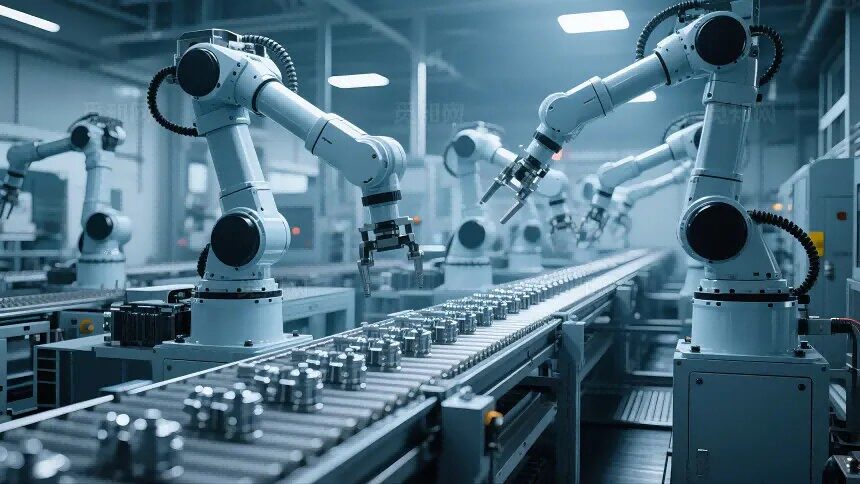
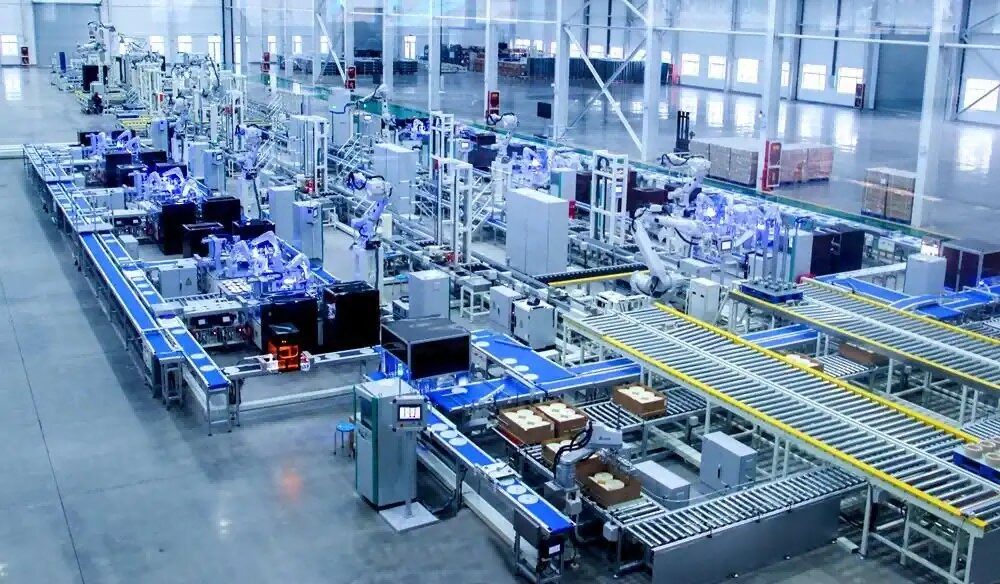
The automated production line design solution is a flexible production model that connects various adjustable workstations, tooling fixtures, equipment, and machine tools, integrated with automatic conveying devices. Through the automated production line software management system for information coordination, the design solution combines multiple production modes to reduce production costs and make the best use of resources.
By implementing this automated production line design, workers are freed from heavy physical labor, partial mental labor, and harsh or dangerous working environments. With the support of the automated production line, employees can operate multiple machines or perform multiple tasks simultaneously, greatly improving labor productivity. This enables flexible automated production for multi‑variety, small‑ and medium‑batch manufacturing, while significantly reducing equipment investment and maintenance costs.
The automated production line design solution effectively integrates microelectronics, computer technology, and systems engineering to resolve the conflict between high automation and high flexibility in mechanical manufacturing. It enables the simultaneous production of multiple product varieties on a single production line, allowing enterprises to adjust production models and output according to demand, thereby enhancing their production adaptability and responsiveness.
Basic Information of Automated Production Line Design Solution
Project Name: Production Line Automation Design Solution
Consulting Period: 1-3 months on-site consulting
Consulting Approach: Diagnosis + Planning + Consulting + Training + Evaluation + Continuous Improvement
Suitable Enterprises: All manufacturing enterprises, such as mass production enterprises in automotive parts, electronics, 3C communications, etc.; and multi-variety, small-batch production enterprises in aerospace, mechanical equipment manufacturing, diesel engines, hydraulic components, etc.
Service Focus:
The automated production line design solution is divided into three phases: production line optimization and design phase, production line fabrication and trial operation phase, and production line operation phase. The solution will provide production line layout planning, finished line deliverables, and operational guidance. We begin by conducting a survey to understand the current status of the client’s production line, then focus on simple automation as the core, designing the line by replacing manual operations with equipment, jigs, and fixtures. Lean methods are adopted to achieve one-piece-flow just-in-time production. Information management is implemented through the solution to enable data collection, process monitoring, TPM equipment management, quality management, production scheduling, and statistical data analysis throughout the entire production process, thereby creating a low-cost, high-quality, and high-efficiency smart compact Cell production line.
During the implementation of the production line automation design solution, we will:
1.Introduce lean production methods, focusing on leveling, just-in-time, and jidoka (autonomation) as core improvement principles to optimize processes, improve motions, and enhance quality, achieving an efficient, high-quality one-piece-flow pull production model.
2.Introduce information management systems for digital, IoT-connected, and visualized management. Data collection is carried out through industrial IoT technology, analyzed by information systems, and feedback is provided via Andon and Kanban, enabling real-time awareness of production line status.
3.Introduce low-cost automation equipment and improve tooling and fixtures. Through mechanization, electrification, and automation, only a small number of employees are required to work with equipment, achieving a flexible production line layout with one person operating multiple machines and automated production.
Introduction to Automated Production Line Design Solutions
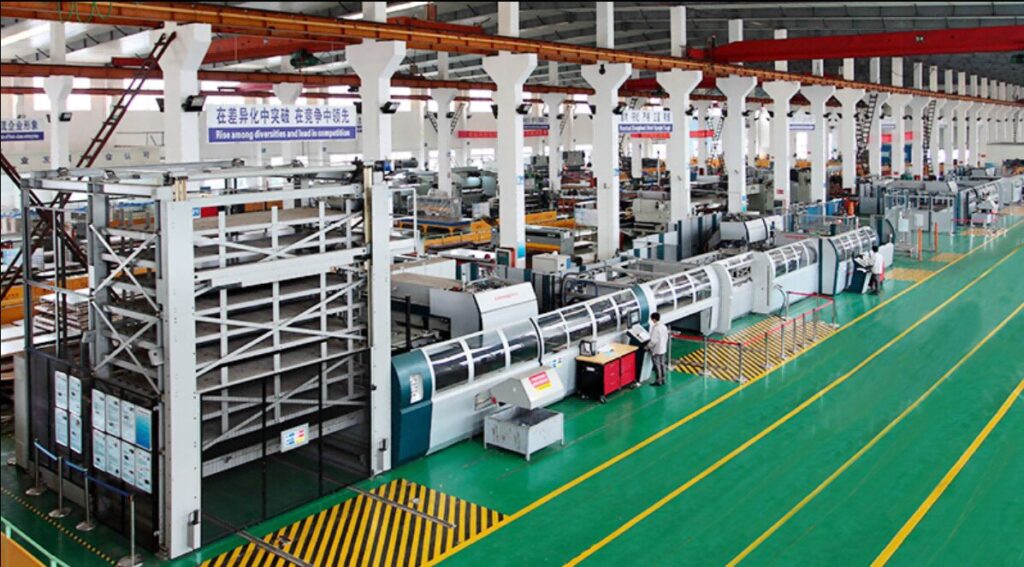
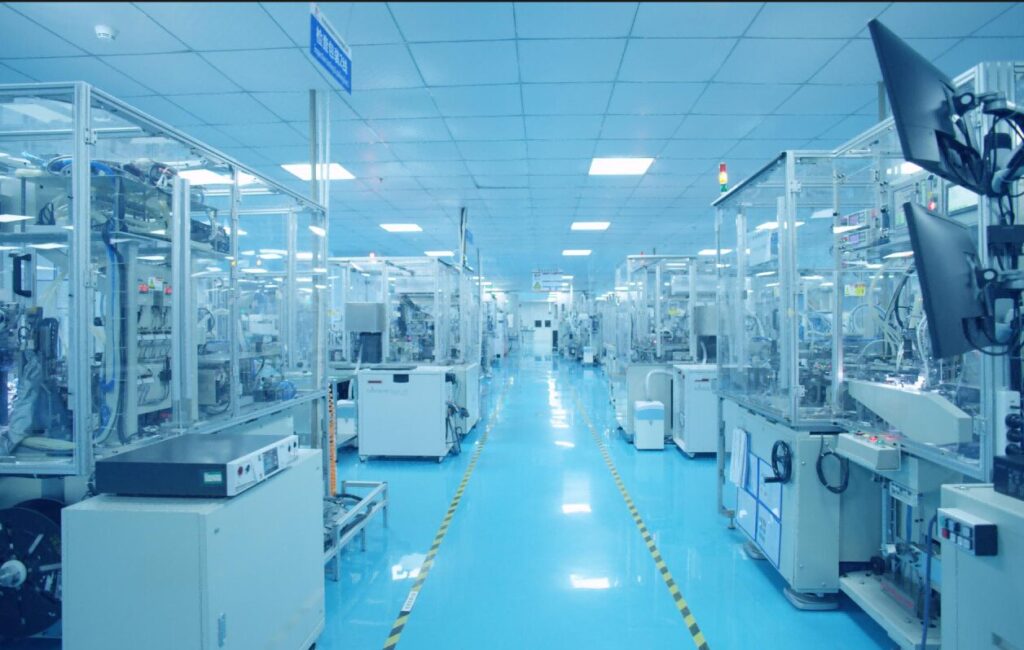
The application of automated production line design solutions is extensive. In the machinery manufacturing industry, for example, automated production lines are used in foundry, forging, stamping, heat treatment, welding, cutting, and mechanical assembly. There are also comprehensive automated lines that integrate processes of different natures, including blank manufacturing, processing, assembly, inspection, and packaging. Among these, cutting process automation has seen the fastest development and the widest application in mechanical manufacturing. Common types include: combined machine tool automation lines for processing boxes, shells, and miscellaneous parts; rotary body automation lines consisting of general-purpose, specialized, or dedicated automated machine tools for machining shafts, discs, and rings; and rotor automation lines for processing small parts with simple procedures.
In automated production line design solutions, equipment can be connected in two ways: rigid linkage and flexible linkage. In rigid‑linkage automation lines, there is no buffer storage between processes, and the processing and transfer of workpieces follow a strict rhythm. If one piece of equipment fails and stops, the entire line shuts down. Therefore, high reliability is required for all equipment in rigidly linked automation lines. In flexibly linked automation lines, buffer storage is provided between processes (or sections), so the cycle times of different processes do not need to be strictly synchronized. When a single machine stops briefly, the buffer storage can balance production within a certain time frame without affecting the normal operation of other equipment. Comprehensive automation lines, assembly automation lines, and longer combined machine tool lines often adopt flexible linkage.
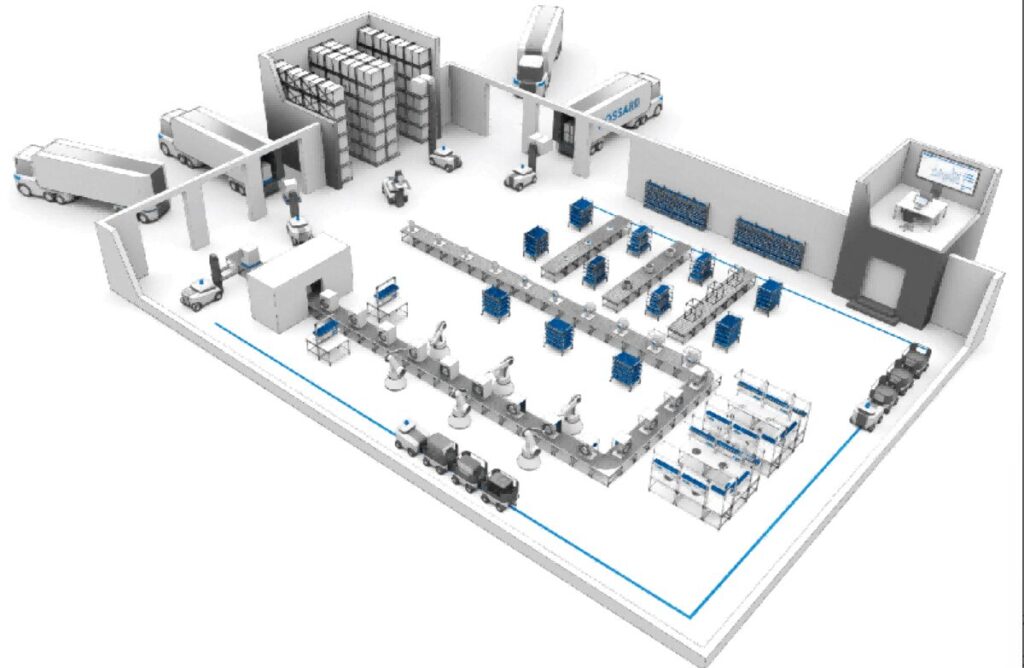
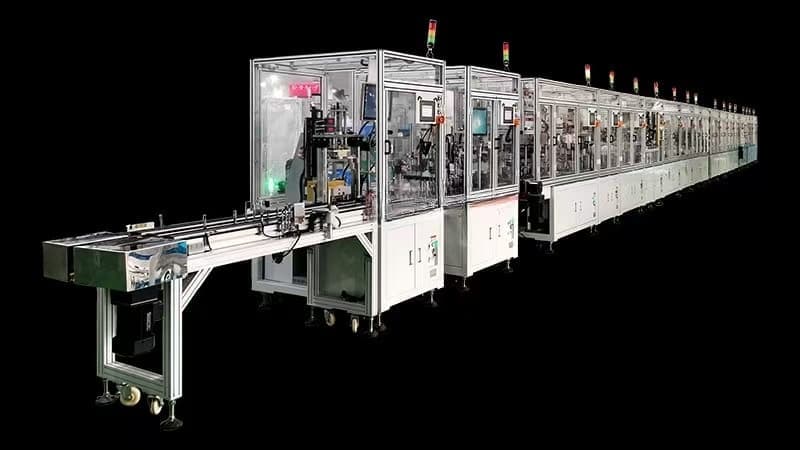
The automated production line design solution mainly consists of: the main production line, branch production lines, control systems, and information systems. It can be divided into flexible production line hardware equipment and a flexible production line information management system. In the production line automation design solution, a Lean Cell Line approach is adopted to connect workstations, tooling fixtures, equipment, machine tools, and transport systems to form a flexible production line system. This ensures that product technical requirements are met, production tact time is maintained, product precision is effectively controlled, and product model changes and upgrades are accommodated — achieving high precision, high quality, high reliability, high efficiency, high flexibility, and consistency.
Automated Production Line Hardware Equipment System
① Main Production Line
In the automated production line design solution, the main production line adopts flexible production integration models such as Just‑In‑Time (JIT) production and agile manufacturing management. After rational consolidation and optimization of the production process, appropriate production equipment is deployed. Combined with the rapid changeover of different tools and fixtures, this enables the production of multiple product varieties on the same production line. At the same time, the main line serves as the primary transportation route in the automated production line design, where the transfer of parts and materials between various workstations is completed. The main line handles one transfer cycle of parts and materials at a time.
② Branch Production Lines
In the automated production line design solution, a branch line is set up at each workstation. The branch lines use loading/unloading devices, conveying devices, storage devices, gravity‑fed or force‑fed chutes or tracks, as well as lifting, indexing, and distributing devices to receive and deliver parts and materials. Through the branch lines, the production line automation design solution can process parts and materials that require special handling, enabling simultaneous production of individual components for multiple product varieties. The branch lines can operate in both forward and reverse directions, allowing them to receive parts from the main line and deliver parts to the main line, with the specific receiving and delivery requirements determined by the information system.
③ Control System
In the automated production line design solution, the control system serves as the central nervous system of the flexible production line. It is responsible for information exchange between the actuators and the information system, and controls the actuators to perform specified actions as required. To accommodate the debugging and normal operation of the automated line, the control system has three operating states: manual setup, semi‑automatic, and automatic. In the manual setup state, manual operation and adjustment are possible, allowing individual actions of each equipment unit. In the semi‑automatic state, single‑cycle operation of a single equipment unit is possible. In the automatic state, the entire automated line operates continuously. In the production line automation design solution, information generated from actuator operations is recorded and fed back to the information system for logical calculation and storage, ensuring accurate actions and providing statistical analysis data for future production management.
Automated Production Line Information Management System
① Production Management System
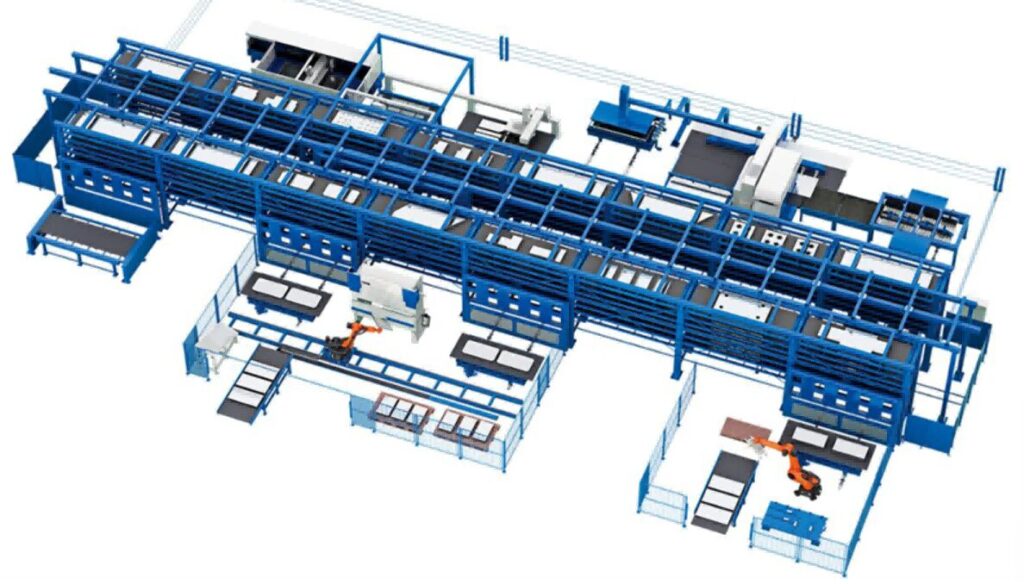
In the automated production line design solution, the information system serves as the upper‑level management system of the flexible production line, primarily utilizing MES (Manufacturing Execution System) and ERP (Enterprise Resource Planning) systems. Its main function is to process product production information, generate data files in a specified format, and dynamically call the corresponding technical documents for each different production run through interface software, transmitting them to the automated production line. Through IoT and monitoring technologies, the production line automation design solution enables real‑time tracking of the flexible production line’s operational status. Based on changes in products or processes, the system pushes the required production data to the corresponding equipment in a timely and accurate manner, while collecting, processing, and feeding back various types of information generated during production, and executing equipment control. Production data generated during the line’s operation is simultaneously uploaded to the information system and stored in its database, providing rich production data for production management.
② Tooling / Tool Management System
In the automated production line design solution, the tooling/tool management system enables real‑time, dynamic, standardized, just‑in‑time, and automated management of the fixtures, tools, and jigs required for flexible production. It comprehensively meets various tool management needs and fundamentally eliminates blind spots and loopholes in tool management. Upon receiving a processing task, the system allows the tooling/tool warehouse to promptly and accurately prepare the required tools and fixtures according to the product‘s process requirements and deliver them to the production workstation, significantly reducing waiting time and improving production preparation efficiency.
Introduction to Automated Production Line Design Solution Services
The smart factory is an organizational platform built on manufacturing that encompasses the intelligent implementation and realization of the entire product lifecycle. It represents the specific application of related technologies, products, and systems — such as mobile communication networks, data sensing and monitoring, information interaction and integration, and advanced artificial intelligence — at the workshop and production line levels. The goal is to achieve digitalization, networking, intelligence, flexibility, and greenization of production systems.
1.Digital Smart Factory Overall Solution
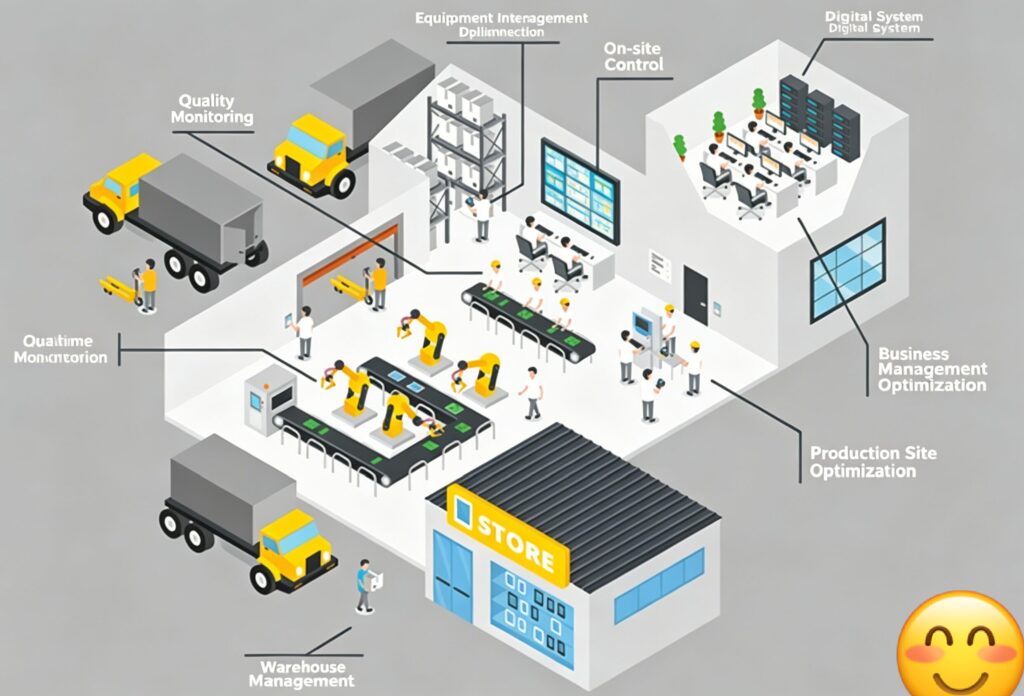
The digital smart factory solution is a comprehensive intelligent manufacturing solution for factory enterprises that integrates lean production management, the Industrial Internet of Things (IIoT), and digital management systems. Through lean methods, the smart digital factory solution scientifically optimizes production sites and management processes. It establishes an information management network via the IIoT, and uses digital management systems to exchange, transmit, organize, and analyze business management, site equipment, and environmental data. The smart digital factory solution enables enterprises to improve production efficiency, enhance product quality, shorten production cycles, reduce manufacturing costs, implement comprehensive error-proofing, and achieve fully digital intelligent production management.
2.Smart Factory Planning Solution
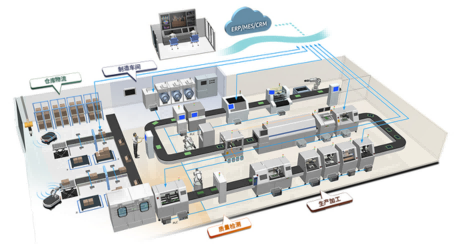
The smart factory planning solution follows the design philosophy and methodology of lean, information-based, automated, and intelligent factory development. It begins by thoroughly analyzing the process and production characteristics of the factory‘s products to determine a rational logistics organization plan. It then considers the impact of site environmental factors on the plant layout and reasonably divides functional zones based on the environmental requirements of the production processes. When planning the plant layout, we not only focus on production efficiency but also emphasize greening and aesthetic arrangement, achieving green design, energy-saving design, and clean design. We provide you with a scientifically sound smart factory planning solution that meets lean production management standards.
3.Digital Workshop Construction Solution
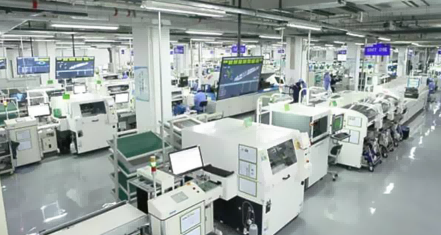
The digital workshop construction solution is the comprehensive application of digitalization and networking technologies within the production workshop. It integrates information from CNC equipment, process design systems, production organization systems, and other management systems to form an integrated manufacturing system with automated comprehensive information flow. At the same time, through production workshop planning, it organically combines all production factors on the shop floor. By unified planning and effective scheduling of the overall workshop environment, it helps factory enterprises achieve lean production layout in their production organization processes, thereby ensuring product quality, cost control, and delivery schedules meet company and customer requirements.
Introduction to Automated Production Line Cooperation Cases
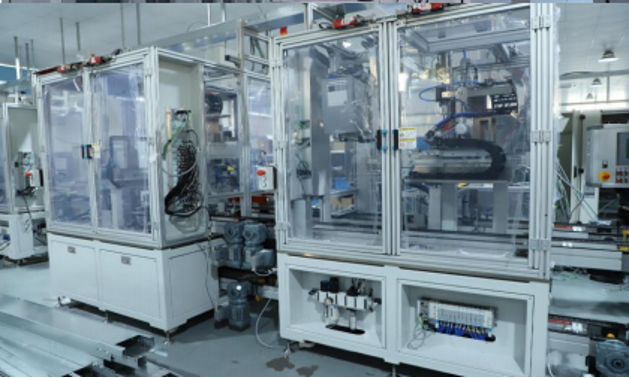
Vehicle Inverter Assembly & Test Line
To address specific customer requirements for inverter products, we provide a wide range of process solutions covering both assembly and testing. Our flexibly designed discrete assembly processes and technologies, together with adaptable configurations that accommodate various testing production needs, offer high scalability and versatility to meet a broad spectrum of engineering applications.
Main Processes:
Automatic loading/unloading
Assembly screw tightening
Laser welding
Selective soldering
Automatic dispensing
Water jacket air tightness test
Final assembly air tightness tes
Product Features:
Insulation test
Burn‑in test
Safety compliance test (hipot /
dielectric withstand)
EOL (End‑of‑Line) test
Functional test with PXI + VPC
configuration,
offering high expandability
Flashing / programming
AOI (Automated Optical Inspection)
Water circuit control (water chiller)
Fully automated unmanned operation
Compatible with multiple product
models with fast changeover
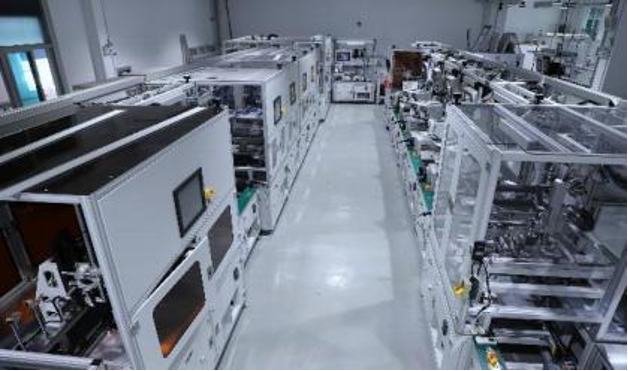
BDU (Battery Distribution Unit) Automatic Assembly & Test Line
The Battery Distribution Unit (BDU) is a critical component in the electrical system of new energy vehicles, responsible for efficiently and safely managing and distributing high‑voltage electrical power to various on‑board electrical devices. To address diverse customer requirements for different BDU products, our company offers a wide range of process solutions covering both assembly and testing.
Main Processes:
Manual loading / unloading
Assembly screw tightening
AOI inspection
Insulation / hipot test
EOL (End‑of‑Line) test
Leak test
Packaging and off‑line
Product Features:
The pallet offers high rotational flexibility, enabling multiple viewing angles for product operations.
Test fixtures are independently designed and developed, ensuring stable contact. Testing can be completed with the product remaining on the pallet, and the test mechanism supports changeover for different models.
The screw‑tightening robot is equipped with vision guidance to automatically compensate for positional deviations, improving the pass rate of the screw‑tightening process.
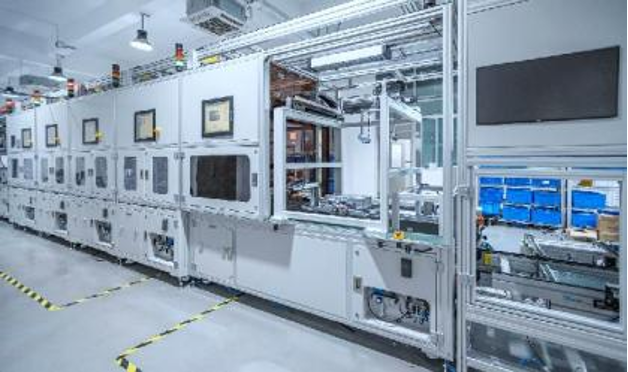
OBC (On‑Board Charger) Automatic Assembly & Test Line
The On‑Board Charger (OBC) is one of the essential key components of electric vehicles. It is responsible for converting external AC power into DC power to charge the vehicle‘s traction battery. To address customer requirements for OBCs of different power levels, our company offers a wide range of process solutions covering both assembly and testing.
Main Processes:
Vision‑guided manual assembly
Automatic dispensing (heat dissipation, sealing, fixing)
Automatic soldering
3D inspection
Screw tightening (manual / automatic)
Product Features:
Key processes are independently designed, ensuring stable operation.
The system hardware and instruments are flexibly configured with strong compatibility, allowing rapid upgrades to test hardware.
The test system software features a rich driver library and high program reusability.
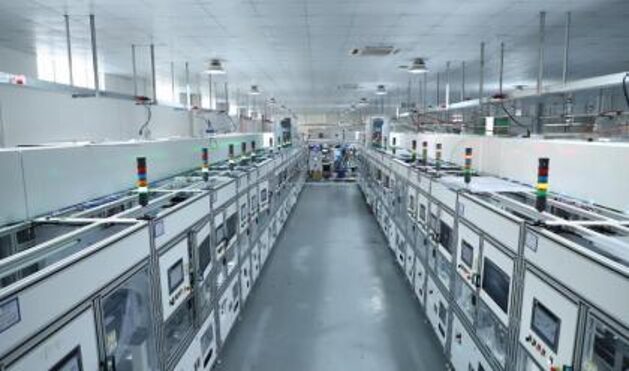
PTC Coolant / Air Heater Assembly & Test Line
The liquid or air heater (Positive Temperature Coefficient, PTC) is a device that heats vehicle coolant or air using resistive heating elements. It is specifically designed to provide a comfortable cabin environment and battery temperature management for electric vehicles. The heater utilizes liquid medium as a heat transfer carrier, achieving cabin heating and battery pack temperature regulation by heating the liquid. To address customer requirements for heaters with different processes, our company offers a wide range of process solutions covering both assembly and testing.
Main Processes:
Laser marking
Press fitting
Screw tightening
Air tightness test
PCBA servo pressing and inspection
IGBT test
Dispensing and vision inspection
EOL (End‑of‑Line test)
Product Features:
Key processes independently designed for stable operation
Standardized production line framework and functional process modules
Common software operation platform
Compatible with multiple similar product types
Short development cycle
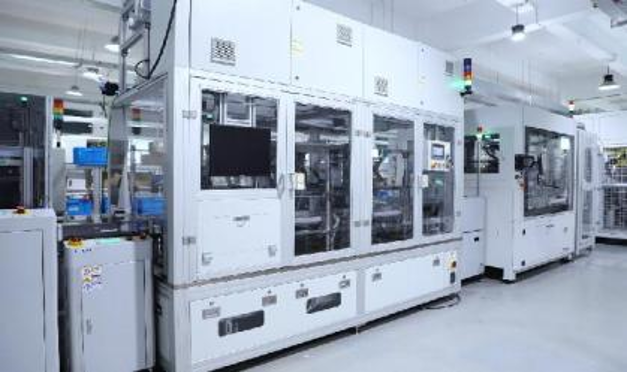
BMS (Battery Management System) Assembly & Test Line
The Battery Management System (BMS) plays a vital role in new energy vehicles, serving as an indispensable system for ensuring the safe and efficient operation of the battery pack. To address customer requirements for different types of BMS products, our company provides comprehensive automated test solutions covering both PCBA and finished products.
Main Processes:
Board loading
Programming / Flashing
Depaneling / Panel separation
Automatic unloading
Product Features:
Fully automated operation with only one operator required for loading and unloading.
Compatible with various products (48V & 12V), with fast changeover.
Quick‑change fixtures accommodate different product types.
Self‑developed upper and lower fixture modules support step‑by‑step programming for multiple panel configurations; combined hardware and software integration ensures higher production efficiency.
ICT (In‑Circuit Tester) single‑station handling achieves board changeover in just 9 seconds, with repeatable positioning accuracy of ±0.002 mm.
Individual shielding enables continuous production, facilitating equipment maintenance, inspection, and model changeover.
Pioneering software‑directed changeover supports multiple panel formats (single panel, multiple panels). Multi‑axis servo precision transfer modules, laser displacement sensors for board orientation and model detection, multi‑link servo lead‑screw pressing modules, and automatic track width adjustment via servo control.
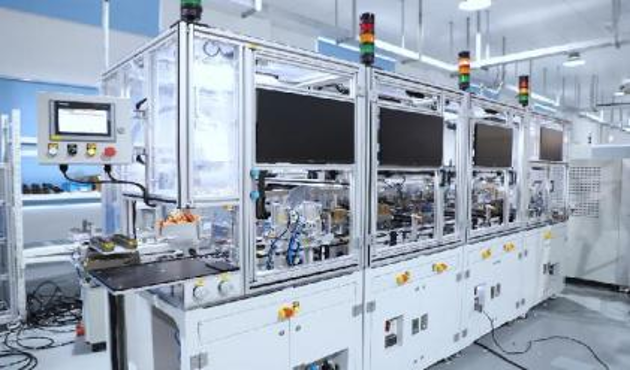
IGBT SiC Power Semiconductor Assembly & Test Line
Power semiconductors (IGBT SiC), specifically insulated‑gate bipolar transistors based on silicon carbide (SiC) technology, play a critical role in electric vehicles. These advanced power devices perform essential power conversion tasks, including converting AC to DC to charge the battery, and converting DC back to AC to drive the electric motor and propel the vehicle. Additionally, they enable precise control of AC frequency and voltage, ensuring efficient and stable operation of the vehicle‘s powertrain and charging systems. To meet customer requirements for IGBTs at different voltage levels, we provide proven test solutions.
Main Processes:
Robotic automatic loading
Air tightness test
Heating test
Static test
Blow‑off
Robotic automatic unloading
Water circuit control (chiller)
Product Features:
Increases production efficiency by 3×, achieving fast tact times at industry‑leading levels.
Test fixtures are independently designed and developed, ensuring stable contact.
Equipment supports multiple machine types via a common interface, enabling simple and fast production changeovers.
Intelligent production mode supports automatic changeover and re‑testing for rework.
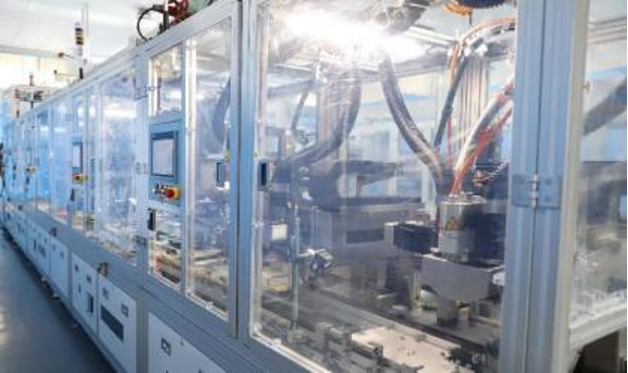
Brake‑by‑Wire Controller Assembly & Test Line
To address specific customer requirements, we provide a comprehensive assembly and test solution for integrated brake control systems, designed to ensure efficient operation and outstanding performance.
Main Processes:
Ferrite Plasma cleaning & assembly
Ground spring & coil spring assembly
AOI (Automated Optical Inspection)
PCBA assembly & pressing & inspection
Gasket assembly & inspection
Sealing glue dispensing & thermal glue dispensing
Flip pressing
High‑temperature curing
Leak test
FFT (Functional / Fast Fourier Transform test)
Connector inspection
Laser marking
Finished product automatic off‑line
Product Features:
Fully automated operation with only two operators required for the entire line.
The line is compatible with multiple product models; hardware and software support fast changeover; quick‑change fixtures are designed with mistake‑proofing (poka‑yoke).
The curing oven adopts a segmented design before and after the oven, improving oven utilization efficiency during product changeover.
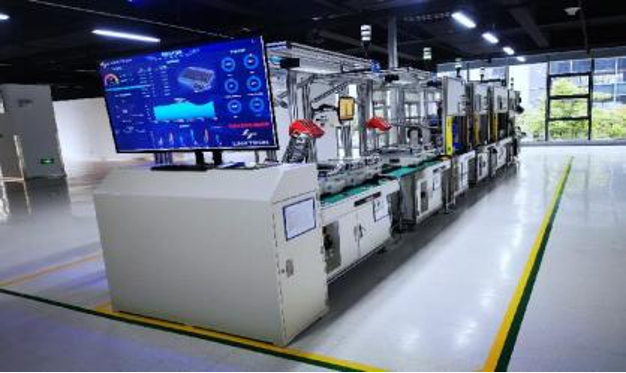
T‑BOX (Telematic Box) Assembly & Test Line
In the field of T‑BOX product testing, Lingchuang has accumulated extensive experience in software and hardware integration for different types of products, including 5G/4G and others. This covers a wide range of applications and large‑scale deliveries, from assembly and test lines to standalone test stations. We continuously learn from experience, driving product updates and iterations, and are committed to improving the stability and reliability of the overall structure and test systems.
Main Processes:
FCT / Programming (Flashing)
Housing dispensing
PCBA assembly
Top cover assembly + screw tightening
Battery installation + battery compartment cover assembly
Labeling / Laser marking
Product Features:
Self‑developed AOI and test systems.
Shielding boxes are compatible with future 6GHz products.
Standardized process platform with modular design.
Screw tightening torque and angle monitoring.
High compatibility and high flexibility.
PC / HMI visual interface.
Full‑line digital communication control with product data traceability.
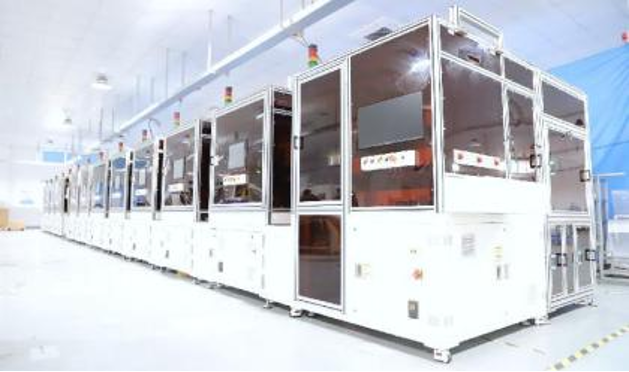
Automotive Camera Assembly & Test Line
Currently, manual assembly is the predominant method, and the production lines for these products are semi‑automated. We provide integrated assembly and testing solutions aimed at optimizing production efficiency and product quality.
Main Processes:
Automatic loading / unloading
PCBA board‑level programming & FCT (Functional Circuit Test)
Automatic screw tightening
Automatic dispensing (thermal adhesive)
FPC installation and vision inspection
Optical axis test
Automatic labeling or laser marking
Product Features:
Key process hardware is independently developed.
Production line framework and key processes are standardized and modularized.
Common software operation platform.
High degree of automation.
Supports rapid changeover and is compatible with multiple similar product types.
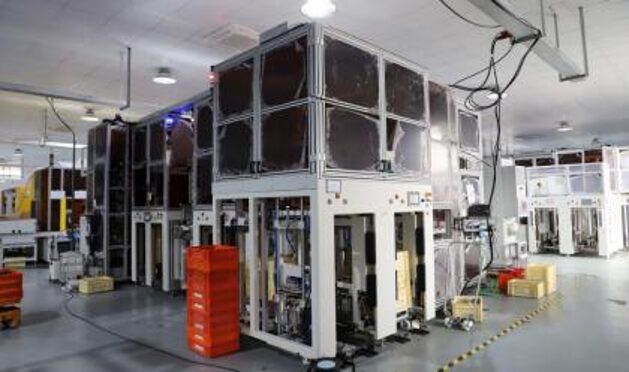
Turbocharger Core Assembly & Test Line
Based on the turbo characteristics of different specifications of turbochargers, we provides high‑precision, high‑standard fully automated assembly and testing solutions.
Main Processes:
Automatic loading/unloading (flexible vibratory bowl, standard vibratory bowl, feeder, robotic loading/unloading)
Automatic servo press fitting
Automatic oil application
Heating / hot pressing
Cooling
Automatic screw fastening
Leak test
Vision inspection
Elongation control
Speed / rotational speed test
Laser marking
Cleaning
AGV (Automated Guided Vehicle) material handling
Product Features:
High‑speed cycle time.
Reliable and stable elongation control.
Fully automated line meets high customer OEE (Overall Equipment Effectiveness) requirements.
Multi‑platform production on the same line, highly flexible, reducing customer R&D and production investment costs.